
Hands-on learning that starts with real food.
At your place, on your schedule, logistics on us
Student Workshops
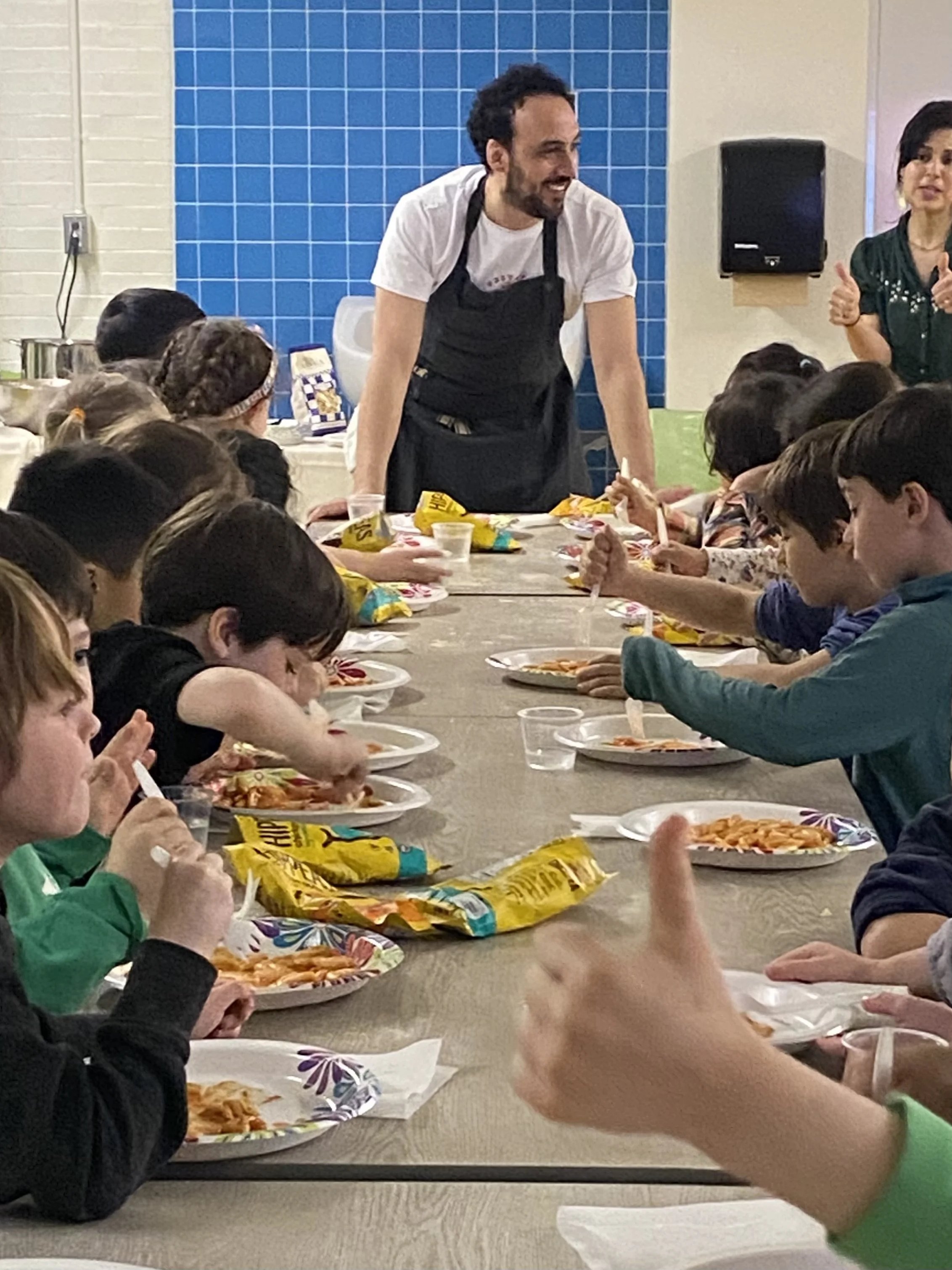
A session fits within a normal school period. Children discover where ingredients come from, cook step by step, reflect on what changed and why, then eat together and take home what they need to make it again.
Every child participates directly. Each has their own equipment and completes every step themselves.
We bring instructors, ingredients and tools. No teaching kitchen, no culinary equipment, no culinary staff — so the program runs in schools and community spaces as they already are. Most partner schools begin with one session and continue as a series.
Family Workshops
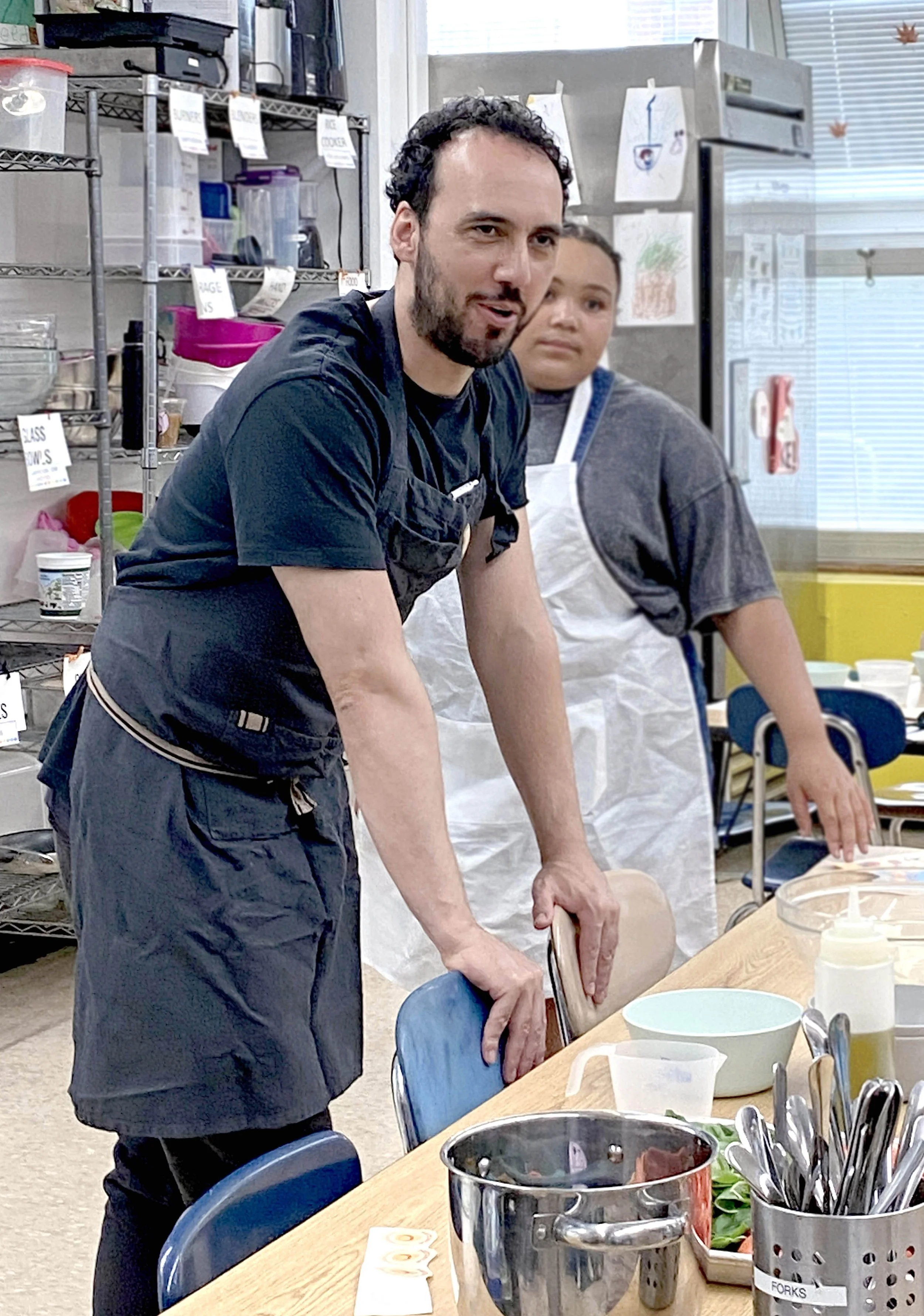
Children and caregivers cook side by side, making a full meal from scratch with a chef.
Families begin with two UNESCO-recognized traditions — Italian cooking and the Mediterranean diet — as a concrete starting point for exploring ingredients, techniques and the stories attached to them. From there, they rediscover, share and celebrate traditions from their own homes and cultures.
Designed for school events and family nights. Take-home kits with ingredients and tools are available upon request, making it easy to recreate the experience in the family kitchen.
Professional Learning
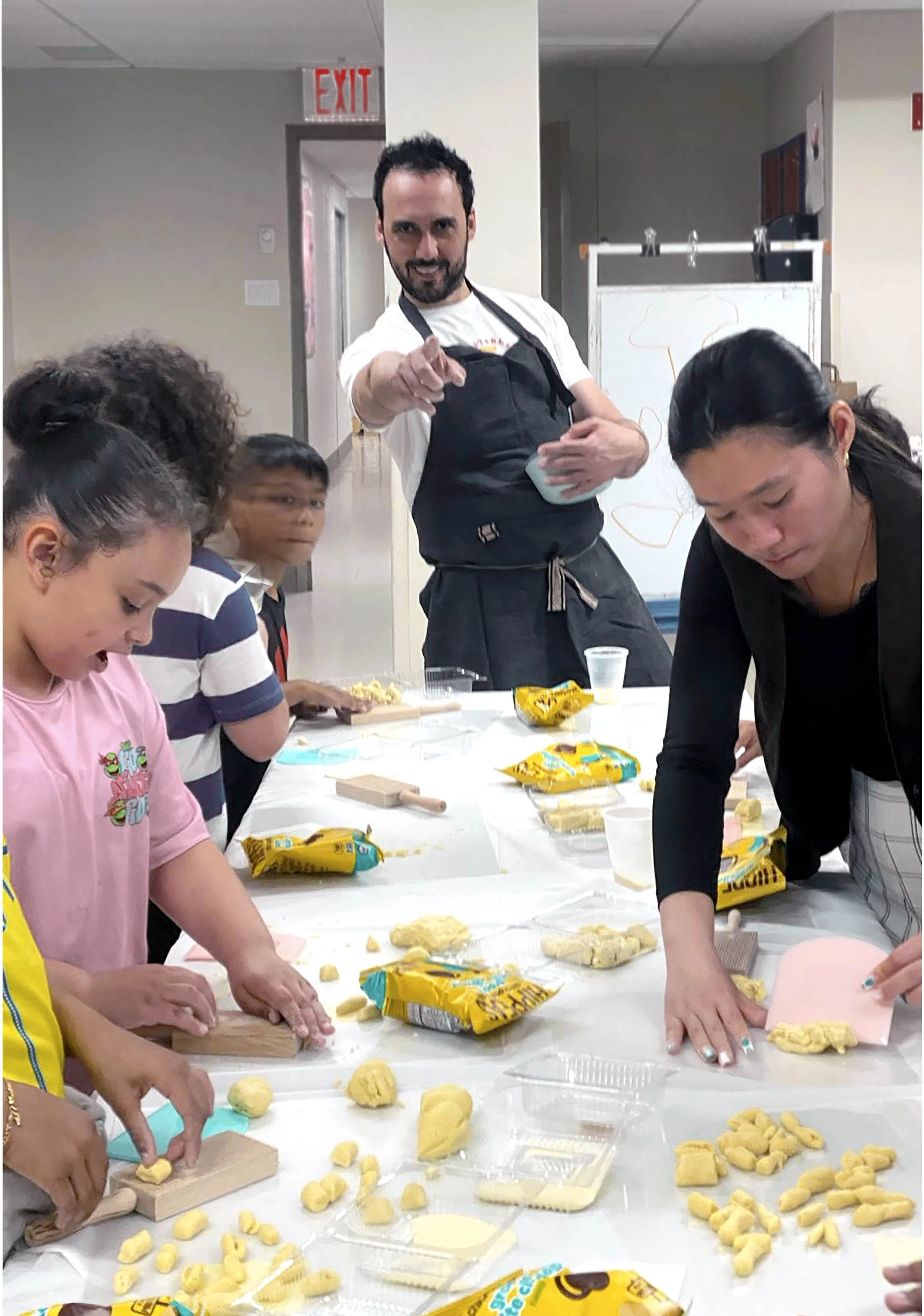
Teachers first experience the session as their students would — cooking from scratch before discussing the pedagogy behind it.
Then we work backward from the classroom. Teachers identify the literacy, math, science or social studies objectives they need to reinforce, and we show how hands-on food learning can carry them using the time, space and equipment they actually have. They leave able to adapt and run the experience without us.
Designed for PD days and staff meetings. Available through the NYCPS Professional Learning Catalog.
Curriculum designed by our co-founder, Chef Leonardo Palazzo — 30 years in hospitality and 12 in food education, currently teaching at La Scuola at Eataly Flatiron.
Our Partners



Support our instructor fund
Pastable is a 501(c)(3) working in schools and community organizations — in buildings with no kitchen, no equipment and no culinary staff.
Schools keep asking us back. Gifts go to training and paying the chef instructors and facilitators who make that possible.